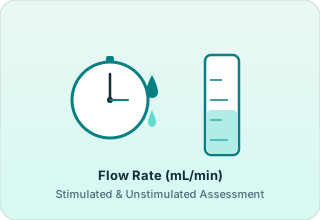
| Volumetric rate of saliva production (mL per minute) at rest and under gustatory or mechanical stimulation. | Discussed when patients report persistent dry mouth, difficulty swallowing, medication side effects, suspected Sjögren's syndrome, or unexplained rampancy of decay. | Clinical Limitation:Salivary volume fluctuates throughout the day, with hydration status, and ambient anxiety. Demonstrating reduced flow does not identify the underlying medical cause. | Clinical timed collection (e.g. passive drooling for 5-15 min for unstimulated; paraffin chewing for stimulated collection) into calibrated vials. |
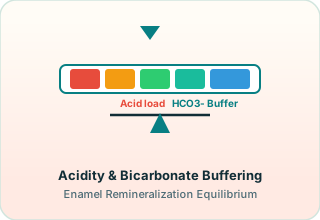
| Resting saliva pH and titration capacity of the salivary bicarbonate and phosphate buffering systems. | Discussed when evaluating caries risk, frequent acidic dietary exposure, gastroesophageal reflux (GERD), or recurring tooth sensitivity and erosion. | Clinical Limitation:Buffering is a momentary physiological measure. Low buffering capacity elevates risk under high carbohydrate or acid exposure, but does not diagnose active cavities by itself. | Chairside pH indicator test strips and colorimetric acid-titration reagent kits. |
| Presence and semi-quantitative or quantitative DNA levels of designated bacterial species via molecular PCR or culture. | Discussed in refractory periodontal conditions, high-risk caries assessment, or when monitoring biological response to deep periodontal therapy. | Clinical Limitation:Crucial clinical limitation: Detecting a pathogen does NOT prove active disease or bone destruction, nor does it establish treatment by itself. Many organisms exist commensally in healthy mouths. Physical probing, bleeding scores, and radiographs remain the diagnostic gold standard. | Sterile paper point or whole-saliva rinse collected chairside and forwarded to a CLIA-certified clinical laboratory for quantitative PCR. |